
Default cash basis accounting from tax year 2024-2025

The first thing that needs to change for tax return ’24-25 is that HMRC are assuming everybody is on the cash basis system for recording your income and expenses, and that is how you are completing your tax return. Whereas normally it’s assumed you’re on the accruals or accounting basis and you have to opt in by ticking the box to say you’re on the cash basis, they have now stated that everybody should be on the cash basis unless you opt out.
What is the cash basis?
It’s not a case of people paying you in cash only. No, no, no, no. That’s not it. Do we have cash anymore? This is a simple method of accounting of for income and expenses and are recorded when money actually comes in or goes out of the business. You can be creating these accounts of bookkeeping records from your bank statements, credit card statements and even physical cash you have handed over. You are accounting for your income when you receive the income and you are accounting for your expenses when you’ve actually paid the expense.
That’s great. It does clarify what happens at the tax year end. If you have invoiced somebody but they haven’t paid you within that year-end, you do not count it as income in that year. You only account for the income when they have paid you, not when you’ve done the work, which is completely different to how we normally do accounts.
For expenses: it is when the expense has been paid out. So you might be doing some work abroad and you have booked your flights in order to get a cheaper fare three months beforehand. Well, you account for that cost in the tax year you paid for the expense. There’s no carrying it over to the following year in order to match with income. Be aware that is your are paying for something expensive over a few months/years, as there is no capital allowances, the cost of that item is expensed when the money leaves your account. EG Barclays 12 month finance for a new laptop.
The rules
Cash accounting used to be that you can start to use it if your fee income was less than £150,000, but you’d have to leave the cash accounting scheme at £300,000. Well, that was the default position, but for ’24-25 onwards, they have removed those thresholds. So even if your fee income is £200,000 you can still start to be on the cash basis. There is no threshold entry criteria, there is no exit criteria. woo hoo.
As previously mentioned about expenses that you have paid for the following tax year, you then have to consider the deposits you have taken. So if you are doing, let’s say a wedding and somebody pays you £150 deposit, you would normally carry it over to the year that you actually do the work unless of course there is a no refund clause. The situation now is you account for the deposit when you receive the money. So it could be something that’s two months in advance, six months in advance, two years in advance. If in six months time you’ve had to refund it because it was a refundable deposit and they’ve cancelled the wedding, then you would put in your accounting records as negative income, not an expense and that could straddle a tax year. It is based on when you paid back the deposit.
As I’ve already said, it is not necessary to be physical cash. It is based on doing your accounts via your bank statements and what’s gone through the credit card statements.
Bank Accounts
To make it easy, and I know I keep barking on about it, set up a bank account that is specifically used for self-employment. It doesn’t necessarily have to be a business bank account, although the banks would love it if you did that because then they can charge you £7 a month or whatever it is now. It could be a personal bank account that you earmark only for your self-employed income and expenses. You need to tell the bank what it’s for so they may insist you have a business bank account. They are the bank’s rules let legal rules. If you want to bank with that bank, then you have to stick with their rules. So that’s just something to be aware of. But always tell them if they ask what that bank account is going to be used for.
If we have one sole trader bank account, then it’s going to be so much easier to manage this cash accounting process because you only need to look at one bank account full stop. Yes. We know that if you are self-employed, all your income is going into that one bank account therefore, how do you pay your mortgage? How do you pay your council tax? How do you pay your shopping bill? Well, obviously you will need to move money from the business bank account into your personal bank account, but don’t do it £10 by £10 by £20 etc. Have a think about what you’re actually going to need for the month and transfer lump sums that are pretty obvious what it is into your personal bank account.
Other changes to cash accounting
There are certain rules about cash accounting. One of it was you can only have up to £500 of bank and finance interest going against your self-employed business. From tax year 2024-2025 that has now been removed. So you can have as much bank interest as you are charged for your business transactions. If you are not using an individual bank account for your self-employed stuff, then you would have to apportion bank interest per the amount you are over due to business transactions. Makes it really messy. I would just get a separate bank account and then anything providing you are using it correctly, any bank interest in there would be allowable.
Prior to tax year 2024-2025, there was a rule about where any losses you make can be accounted for. So if you have self-employment and you’ve made a big loss, your only option was to carry forward the loss. You were not able to carry back the loss to previous profitable years or do something called sideways relief. If you had a PAYE job that you’ve paid tax in, you could not offset the loss against that PAYE income. But come 2024-2025, those rules have changed and you are now able to carry back losses as well as carry forward against the same business, plus sideways relief against other income such as PAYE in your tax return.
If you’ve got two businesses, one makes a profit, one makes a loss, then you could offset part of the loss against the other business in the tax year, but then the rest of it and you have no other choice in what to do with it, then the rest of the loss will have to be carried forward to be used against the same business.
Having two businesses
Prior to 2024-25 if you had several businesses, you would have to treat them both the same as to whether you do cash accounting or whether you do accruals or traditional accounting. From 2024-2025 onwards, you can do one of your businesses on cash accounting and one of your businesses on accrual accounting. If they are two very different businesses, as should be the case, have separate bank accounts for the two different businesses. So let’s pretend you are a piano tuner as one business and a plumber for the second business. Keep them both separate.
Capital Allowance
Finally, the big issue is what people do with capital allowances – this is if you buy an instrument or buy a new PC, etc. Under the old traditional rules (and would still apply if you ticked, “No. I’m using traditional or accrual accounting,”) is that any big expense you could carry over and use a capital allowance for future years. You are able to have an annual investment allowance which could be 100% of cost or a smaller amount, and then take a writing down allowance of 18%. There are many more videos about capital allowances on my FAQ page so you can check them out.
If you buy a 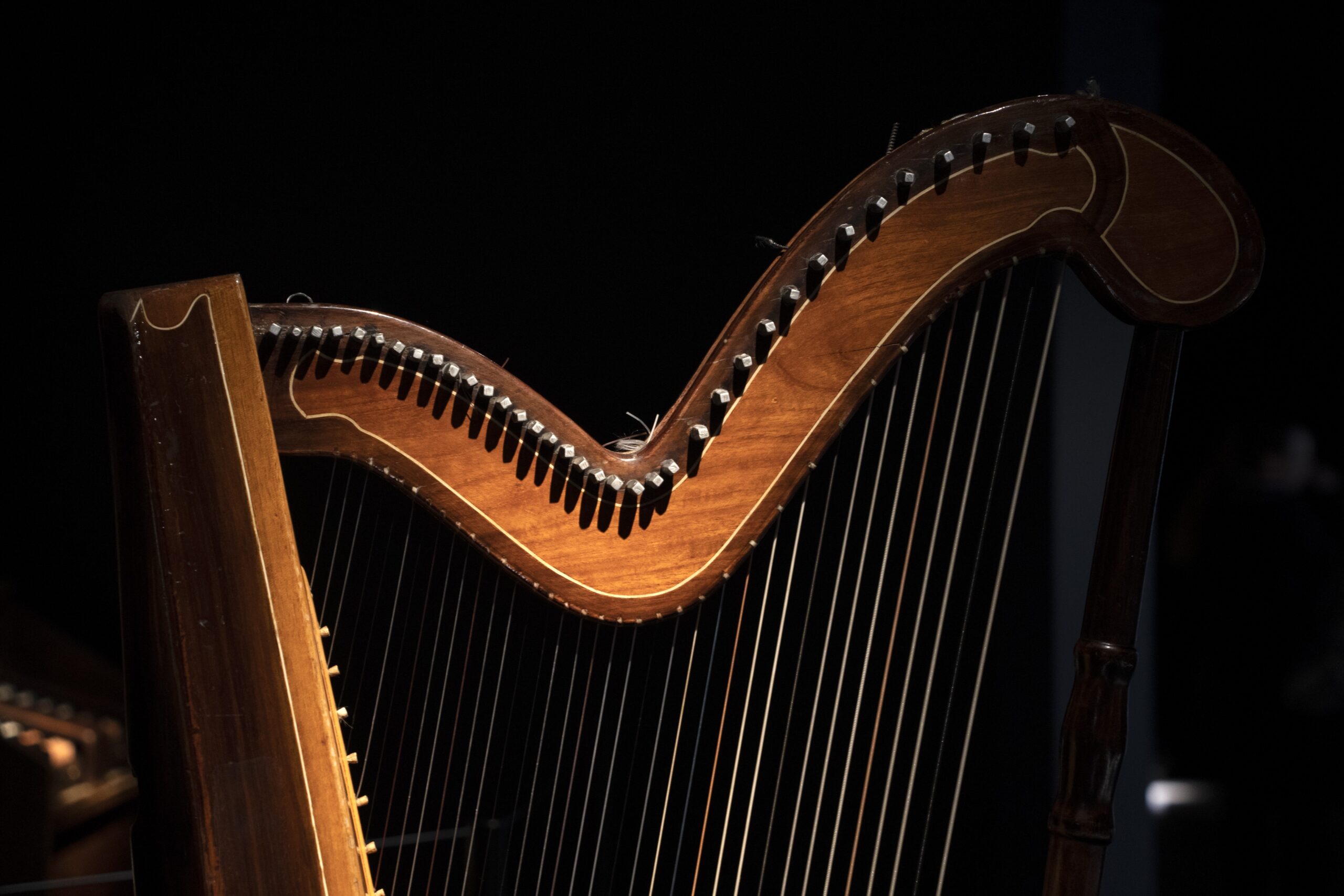 £5,000 flute head joint in the year 2024-2025 onwards, if you do cash accounting, you would have to write it off 100% in that year. That’s all very well if you’ve got a whole load of profit, etc as it is a great way of getting rid of some, so you can expense it straight away. But if you’re borderline as to making a profit or using your personal allowances, your only option then is to use traditional accounting and carry it over as a capital allowance for future years.
The real pain is if you have extremely expensive instrument, EG, violin, cello, harp, things like that, you really do not want to be doing cash accounting. You want to be doing traditional accounting and then you can spread the cost of those instruments over a number of years. Should you do cash accounting, you probably will get rid of all your profit and personal tax allowance for the year and possibly future year.
If you then sell the instrument, the sales price is income and you will be taxed on it as there is no expense to go against it.
Capital Allowances for a car
The only joy of capital allowances if you do cash accounting is you can have a capital allowance for the purchase of a car. So that would have to be split out from whatever assets you have purchased and you can claim either 6% or 18% of the car depending on the CO2 emissions, but then you’ll be doing your actual method for calculating the cost and use of that car. You cannot claim simplified expenses of 45p per mile and claim the capital allowance for the car.
Final words
So that in a nutshell … Okay. It’s a very large nutshell, but that is what is going to be affecting you for 2024-2025 onwards. It will be assumed everything’s on a cash accounting basis unless you tick the box to say, “No. I’m using traditional accounting.” Do you really want to write off a £74,000 violin in one year? I would hope not, but you never know. You might have loads of income to get rid of it.
- Default position is that accounts are run on the cash basis for 2024-2025 unless the box is ticked to say traditional/accrual accounting is boing done;
- Have a separate bank account for your self employed business as it will make accounts & tax so much easier especially come Making tax digital for income tax from 6th April 2026;
- Unable to claim capital allowances unless it is for a car and actual motor costs used for expenses;
- Account for transactions when received the money and when money is paid out;
- All bank interest is allowable IF it relates to the business and the £500 restriction is removed.
Any problems, please drop us a line and we’ll try and help.